

Blended families are increasingly common, but when a parent passes away, the legal and emotional issues that follow can become especially complex. For surviving spouses, children from prior relationships, and other loved ones, grief is often compounded by uncertainty over inheritance, decision-making authority, and what the deceased parent actually intended.
In many cases, the conflict is not rooted in hostility. It arises because expectations were never fully discussed, estate planning documents were not updated, or no plan was in place at all.
Why blended families often face added estate complications
Estate administration can be challenging in any family. In a blended family, however, the competing interests of a surviving spouse and children from a prior marriage or relationship can make matters more sensitive.
A parent may have expressed a desire for certain assets, family heirlooms, or financial accounts to pass to their children. At the same time, they may also have intended to provide security for a surviving spouse. If those wishes were never formally documented, the law may determine what happens next, and the outcome may differ significantly from what anyone expected.
That can leave loved ones asking difficult questions, including:
- Who inherits the estate if there is no will?
- Does the surviving spouse automatically receive everything?
- What rights do adult children have?
- What happens to jointly owned property or accounts with named beneficiaries?
- Who has authority to make decisions and access information during the probate process?
The answers depend on the estate plan, how assets are titled, the existence of beneficiary designations, and applicable state law.
What happens when there is no estate plan
When a parent dies without a valid estate plan, their estate may pass according to state intestacy laws. Those laws establish who inherits and in what shares, but they do not account for family dynamics, verbal promises, or unspoken expectations.
That can create frustration and confusion in blended families. A surviving spouse may believe certain assets should remain under their control. Children from a prior relationship may feel they were meant to receive a portion of the estate or specific personal property. Without clear legal instructions, those disagreements can escalate quickly.
In addition to emotional strain, the absence of a plan can result in:
- Probate delays
- Increased legal expense
- Disputes over personal property
- Confusion over fiduciary roles
- Outcomes that do not reflect the deceased’s actual wishes
Even outdated documents can create problems
Having a will is important, but it is not always enough. Estate plans should evolve as families change. A remarriage, divorce, birth of children, death of a beneficiary, or acquisition of significant assets may all warrant updates to a will, trust, deed, power of attorney, or beneficiary designation.
In blended families, outdated documents can be especially problematic. A will created before a second marriage may no longer reflect the current family structure. A retirement account or life insurance policy may still list a former spouse as beneficiary. Real estate ownership may not align with the broader estate plan.
These issues often come to light only after death, when loved ones are already under stress and trying to make sense of conflicting information.
How thoughtful estate planning can help
Careful estate planning can reduce the risk of confusion and conflict by clearly spelling out a person’s wishes and ensuring key documents work together. For blended families, a strong plan can help address not only who receives what, but also how to balance the needs of a surviving spouse with the long-term interests of children from prior relationships.
A comprehensive estate plan can help:
- Clarify inheritance intentions
- Provide for a surviving spouse
- Protect children from prior relationships
- Minimize the risk of disputes
- Improve efficiency during probate or trust administration
- Give loved ones greater certainty during a difficult time
No two families are exactly alike, which is why blended family planning should never be treated as one-size-fits-all.
Planning now can spare loved ones hardship later
One of the most common sources of estate conflict is the assumption that family members will simply “work it out.” Unfortunately, that approach often leaves the people left behind with unanswered questions and competing interpretations of what their loved one wanted.
A well-crafted estate plan can bring clarity where uncertainty might otherwise exist. It can help preserve important relationships, protect loved ones, and ensure that decisions are guided by documented intent rather than confusion or conflict.
For blended families, that kind of planning is not just helpful. It is essential.
Start Planning Today
If your family structure includes a second marriage, stepchildren, adult children from a prior relationship, or other blended family dynamics, now is a good time to review your estate plan.
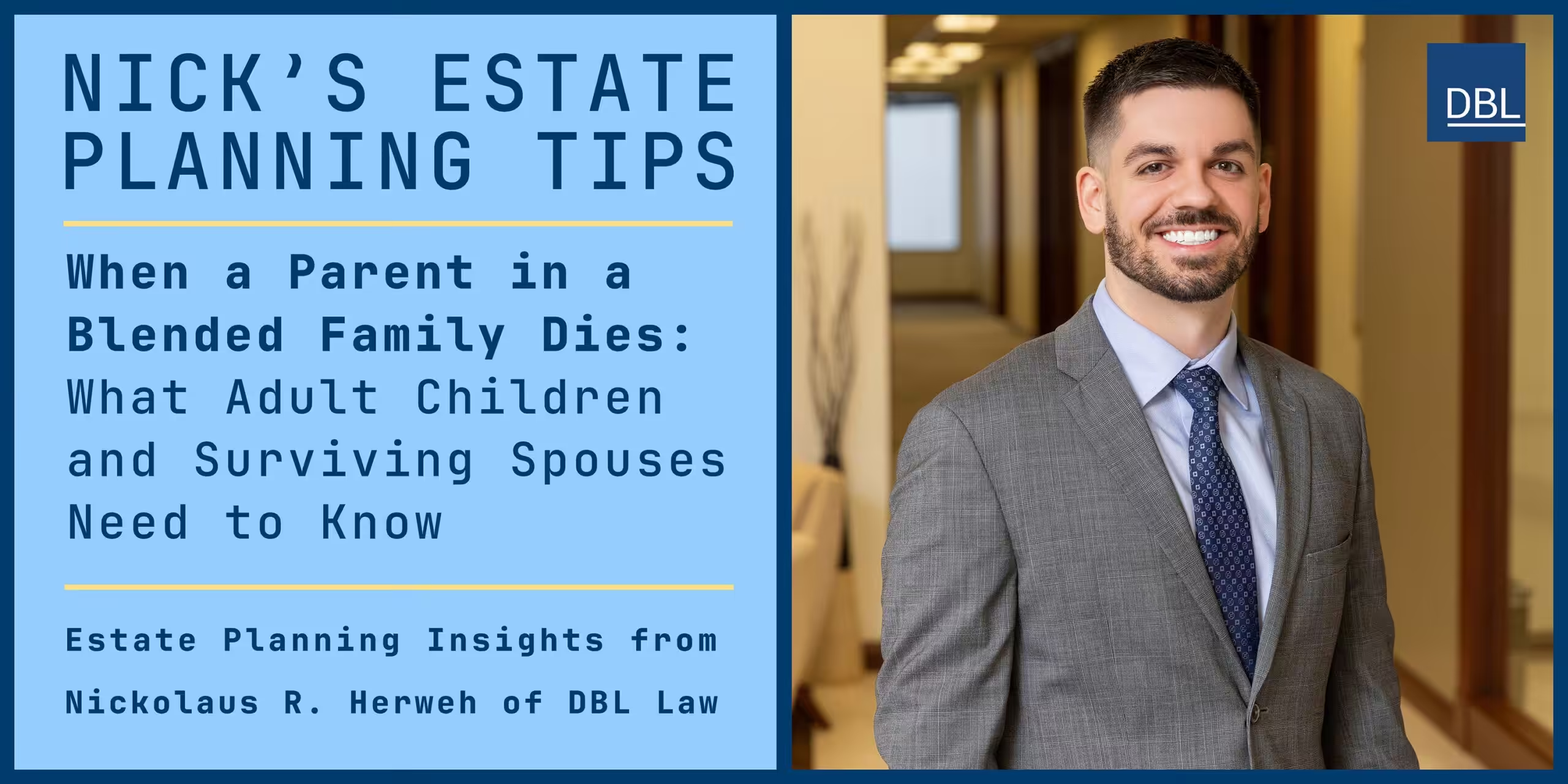
DBL Law attorney Nickolaus Herweh works with individuals and families to create thoughtful estate plans designed to reflect their wishes, protect loved ones, and reduce the likelihood of future disputes.
To learn more or schedule a consultation with Nickolaus Herweh or a member of our Estate Planning Practice Group, contact DBL Law or specifically to Nickolaus at 513-357-7676 / [email protected].