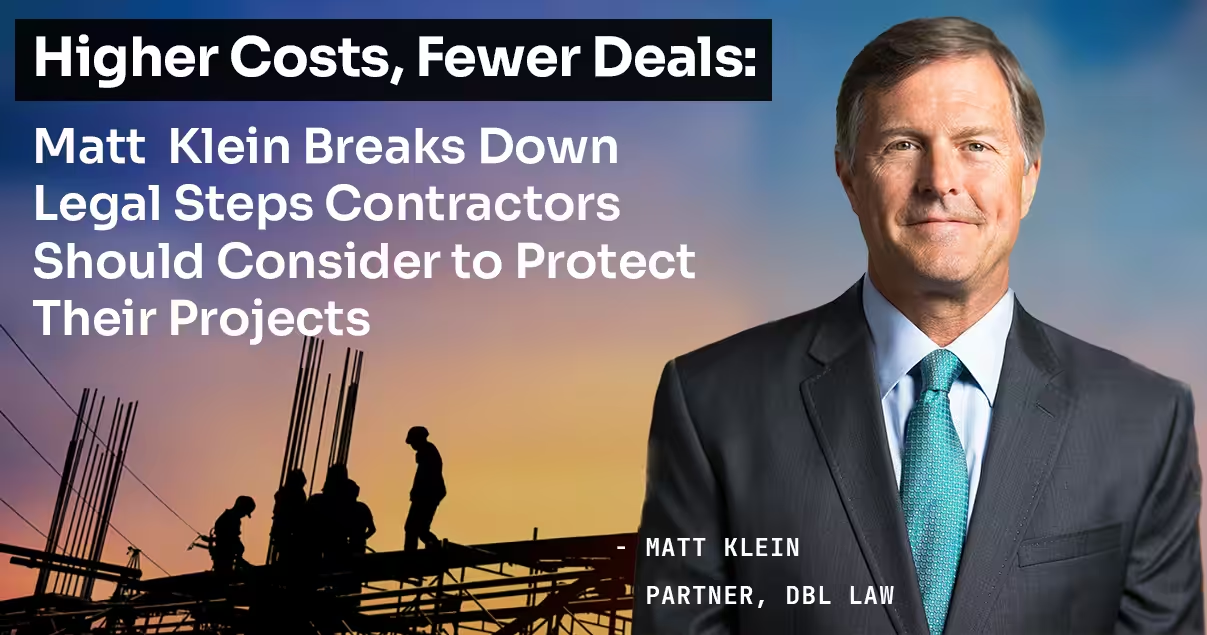

A Cooling Market Meets Rising Costs
Recent data from Associated Builders and Contractors (ABC) points to growing caution across the construction industry. Material and labor costs remain stubbornly high, while borrowing costs and financing hurdles continue to climb. Developers are slowing new project starts, and more firms are reporting smaller backlogs and tighter margins. In short: the work pipeline is narrowing, but the risk environment is widening.
Five Legal Steps Contractors Should Take Now
1. Revisit Your Escalation and Change Order Clauses
If your contracts don’t allow for price adjustments tied to material costs or labor shortages, you’re carrying all the risk. We recommend reviewing your standard contract language to ensure:
- Material cost increases can trigger a renegotiation or adjustment.
- Labor shortages or government tariffs are recognized as valid grounds for schedule or cost relief.
- Change orders are clearly defined in writing, with timelines for approval.
Even a well-worded price-escalation provision can be the difference between a manageable project and a financial loss.
2. Know Your Notice Deadlines — and Meet Them
In a tightening market, more owners are strictly enforcing notice provisions to avoid paying claims. Miss a deadline by a few days, and your valid claim could be denied outright. Train your project managers to:
- Send timely written notice for potential delays or cost impacts.
- Keep contemporaneous documentation.
- Escalate claims through contract-defined channels before they lapse.
It’s not just about documentation — it’s about preserving your legal rights.
3. Address Financing and Termination Risk
High interest rates and stalled private funding have put many projects at risk of suspension or default. Contractors should:
- Negotiate termination-for-convenience and suspension clauses that provide clear compensation for work performed.
- Clarify how and when payments are triggered if an owner’s financing collapses.
- Build in interest protection and grace periods for payment delays.
4. Audit Your Subcontract Flow-Down Provisions
Subcontractors and specialty contractors are often the most exposed when the project economics shift.
Ensure your flow-down provisions:
- Pass through the same rights and protections you have upstream.
- Do not impose more restrictive obligations than your prime contract.
- Clearly define notice and dispute resolution timelines consistent with the owner agreement.
A brief legal audit of your standard subcontract templates now can prevent major conflicts later.
5. Prepare for Public Funding Shifts
Much of the current construction momentum has been fueled by federal infrastructure and energy investments. But those programs are set to taper in 2026 unless renewed. For contractors active in public or quasi-public work:
- Review whether your contracts allow relief for appropriation lapses or changes in law.
- Track bid and performance bond exposure as project volumes shift.
- Build in protective language tied to delayed or withdrawn public funds.
Planning Ahead: Protect Your Backlog Before It Shrinks
As Construction Dive reported, 2026 and 2027 may bring a further slowdown in commercial construction starts. For contractors, the next 18 months are critical. Now is the time to tighten your contracts, strengthen your documentation habits, and preserve every claim right you have. Legal preparedness isn’t about pessimism, it’s about staying profitable when the market softens.
How DBL Law Can Help
DBL Law’s Construction Practice Group works with general contractors, developers, subcontractors, and suppliers across Kentucky, Ohio, and Indiana on contract negotiation, project risk management, and dispute resolution.
We help our clients:
- Resolve disputes efficiently through mediation, arbitration, or litigation
- Draft and negotiate escalation, change order, and termination provisions.
- Audit subcontract templates and flow-down terms.
- Develop claims preservation protocols and training for project managers.
For more information, contact:
Matt Klein, Attorney