
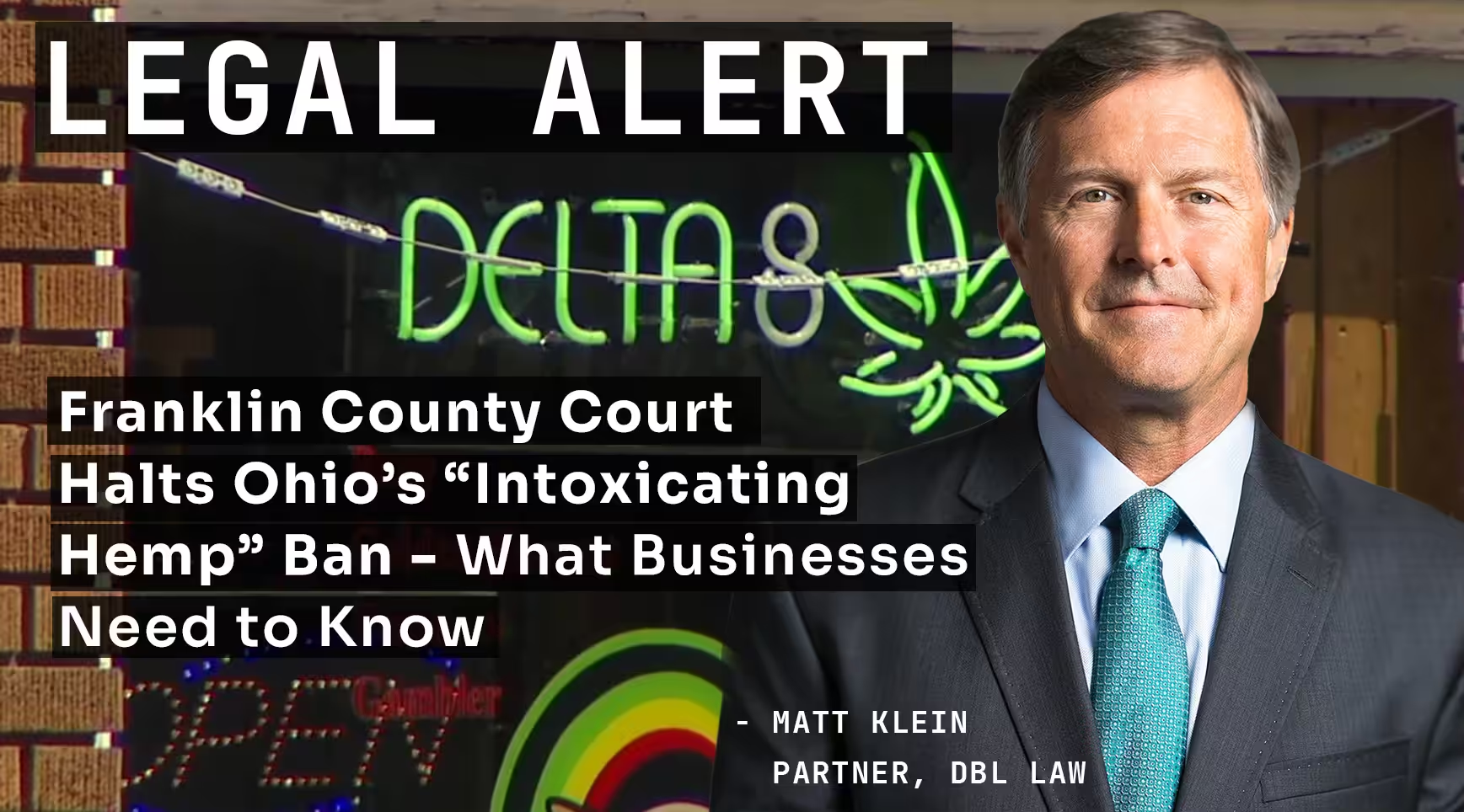

A Franklin County judge has temporarily halted enforcement of Governor Mike DeWine’s executive order banning the sale and manufacture of “intoxicating hemp” products in Ohio. The decision pauses a sweeping regulatory shift and creates immediate uncertainty for retailers, distributors, and manufacturers across the state.
Background
On October 8, 2025, Governor DeWine declared a consumer product emergency and issued a 90-day ban on intoxicating hemp products—primarily delta-8 THC, delta-10 THC, and certain hemp-derived forms of delta-9 THC sold outside Ohio’s regulated cannabis program.
The order directed the Ohio Department of Agriculture and the Ohio Department of Health to amend existing administrative rules and exclude these products from the legal definition of “hemp.” It also suspended normal rulemaking procedures to fast-track enforcement.
According to the Governor’s office, the move was prompted by a sharp rise in poison control calls involving minors who ingested hemp-derived products. Reported exposures among individuals under 19 have nearly doubled since 2021.
The order exempted non-intoxicating hemp products, such as CBD, and items sold through Ohio’s licensed medical marijuana dispensaries. But many in the industry argued that the line between “intoxicating” and “non-intoxicating” hemp remains unclear—and that the ban would effectively shutter legitimate hemp businesses.
The Court’s Decision
In response to lawsuits filed by several hemp companies and industry groups, a Franklin County judge granted a temporary injunction, blocking enforcement of the ban while the case proceeds.
The ruling suggests the court found a likelihood that the plaintiffs could succeed on the merits—particularly on the question of whether the Governor exceeded his legal authority under Ohio law by imposing such restrictions without legislative approval.
For now, businesses may continue to sell hemp-derived products that comply with existing state definitions and licensing requirements. The injunction preserves the status quo until the court determines whether the ban—or a modified version—can stand.
Legal and Regulatory Takeaways
The case raises several key questions:
- Executive Authority: Whether the Governor can redefine or restrict hemp products by executive order rather than through legislation or normal administrative rulemaking.
- Statutory Conflict: Ohio’s hemp statute expressly defines hemp as cannabis containing no more than 0.3% delta-9 THC. The executive order’s new definition may contradict that legislative framework.
- Due Process and Vagueness: The phrase “intoxicating hemp” is not clearly defined in statute or regulation, making enforcement difficult and exposing businesses to inconsistent penalties.
- Duration of Emergency Powers: Even if justified as an emergency action, Ohio law typically limits such powers to a defined period unless renewed or ratified by the General Assembly.
Together, these issues highlight the broader tension between rapid public-health responses and statutory limits on executive authority.
What Businesses Should Do
- Monitor the litigation closely. The injunction is temporary and may be revisited at any time.
- Review product lines and labeling. Identify and document which products contain delta-8 or delta-10 THC and confirm they comply with existing hemp standards.
- Maintain compliance records. Preserve purchase, testing, and distribution documentation in anticipation of further regulatory changes.
- Avoid new inventory commitments involving gray-area products until the legal status is clarified.
- Engage counsel. Legal guidance is critical as definitions, enforcement priorities, and timelines continue to evolve.
DBL Law Insight
Ohio’s attempt to regulate intoxicating hemp underscores how quickly legal and regulatory frameworks are evolving in the hemp and cannabis-adjacent sectors. Executive orders can address emerging risks, but they must remain within the boundaries of legislative intent and due process.
DBL Law’s attorneys are closely following developments in this case and advising clients on compliance, product strategy, and litigation risk in the wake of the injunction.
For more information, contact:
Matt Klein, Attorney