

The first week of the legislative session is officially under our belt—and it was a busy one. Lawmakers moved quickly out of the gate, with a steady stream of bills filed and early signals about priorities for the weeks ahead.
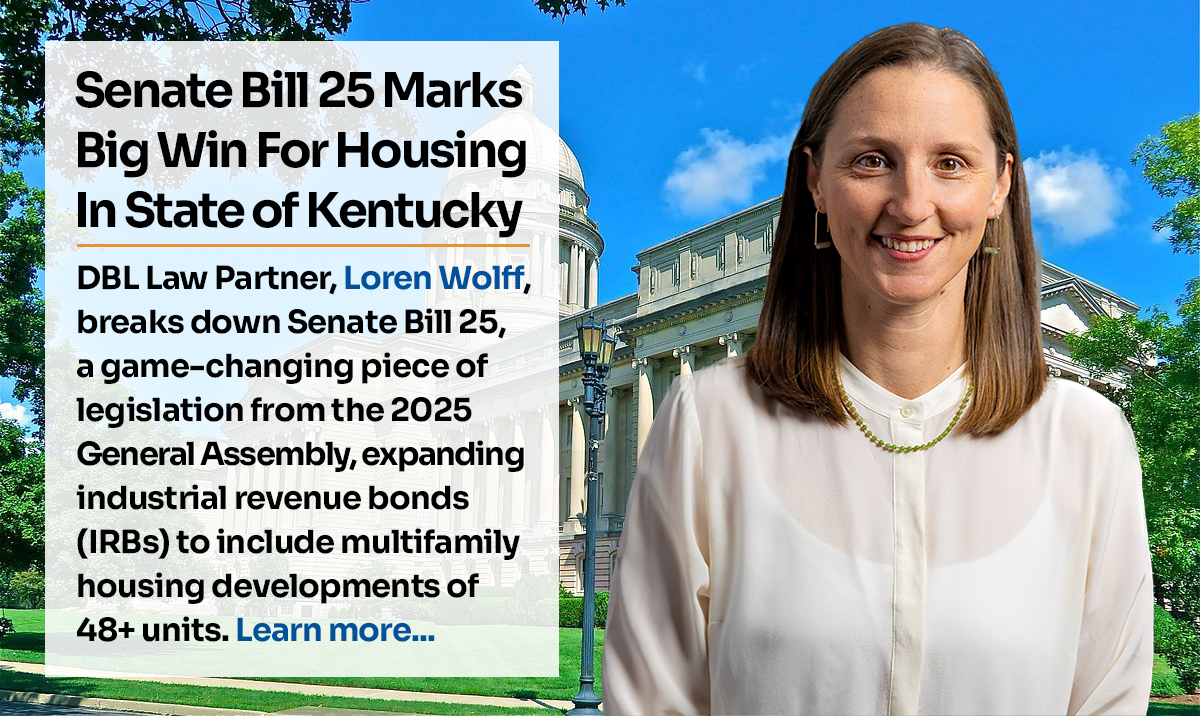
One bill that caught our attention early is SB 9, which addresses an issue that continues to sit at the center of economic development conversations across the Commonwealth: housing.
In our work with developers and local communities, we’ve seen a clear shift over the last several years. Where communities once assumed housing would naturally follow jobs and investment, housing is now a front-end discussion—closely tied to workforce attraction, site readiness, and long-term planning.
SB 9 follows a familiar framework, expanding on district-based financing tools Kentucky has already used for transportation improvement districts and applying them to housing and residential infrastructure. In doing so, it reflects a broader recognition that housing, infrastructure, and economic development are deeply interconnected, and that new tools are needed to respond to current market conditions and community needs.
What makes SB 9 particularly notable, however, is its treatment of land use regulation. The bill appears to allow local governments, by ordinance, to exempt development within a housing development district from traditional planning and zoning review—or to establish an alternative review process that is no more stringent than what would otherwise apply. That is a significant departure from the status quo and a potentially powerful lever for communities struggling with the timing, cost, and uncertainty that often accompany conventional zoning processes.
Of course, the availability of this exemption is not automatic. It requires deliberate local action, including a separate public hearing and vote. And even where an exemption or alternative process is adopted, developers, employers, and local governments will still need to navigate the broader landscape of land use controls, infrastructure capacity, incentive structures, and local political realities.
Even with those caveats, SB 9 adds an important new tool to the economic development toolbox—one that has the potential to meaningfully accelerate housing delivery in communities that choose to use it.
DBL Law’s Economic Development and Land Use team regularly works with developers, employers, and local governments on land use strategy, zoning, and incentive-based development across the state—and SB 9 is definitely one we’ll be watching closely.